
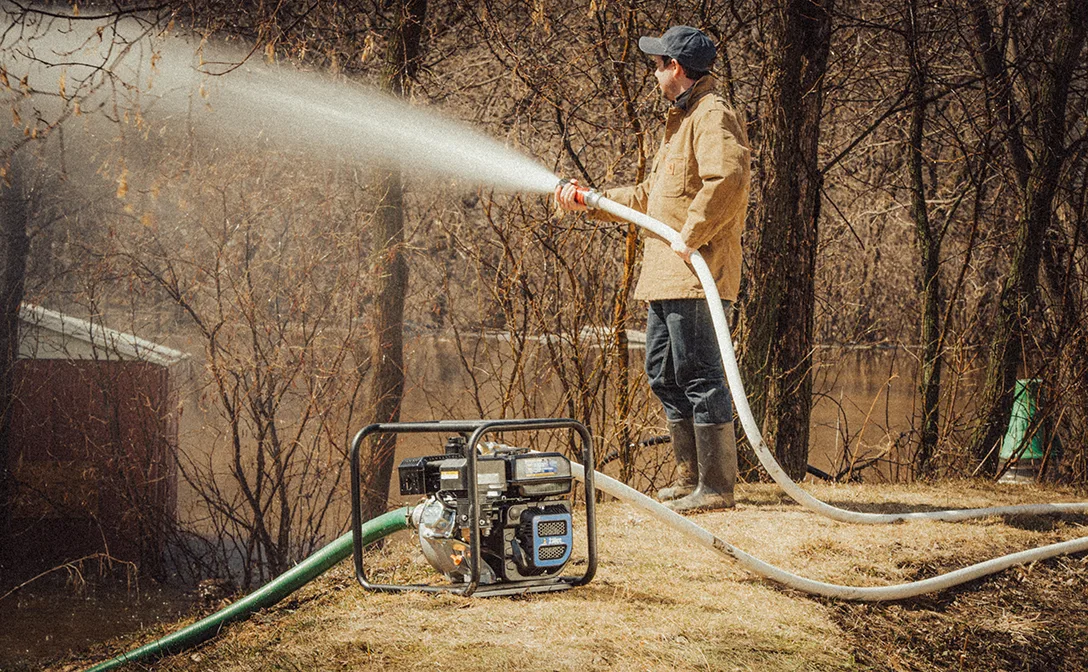
Water pumps keep water moving for residential and rural properties like homes, farms, cabins, and more. From energy-efficient solar units to high-pressure models, picking the right one’s a breeze with this guide.
Choosing a pump’s easy when you know what’s up:
Head: How high it lifts water—think 50 ft for a deep well water pump.
Flow (GPM): How fast water flows — 10 to 20 GPM for homes, more for irrigation.
Type: Centrifugal pumps for speed, submersible for wells, booster for high pressure.
Power: Electric pumps for homes, gas or diesel units for farming or agriculture or battery-powered backup pumps.
Size: Small and manually-operated or large-scale irrigation pumps.
Want an automatic water pump for steady pressure? Pair it with a pressure tank.
Tip: We’ve seen stainless steel beat cast iron for corrosion resistance. Check our top picks (#).
Here’s the rundown on types of pumps and what they’re good for:
Submersible: Deep well or pond water pumps—no priming, just water flowing.
Sump: Beats floods (water pump vs. sump pump? Sump pumps are intended for drainage).
RV Water Pump: These are 12V pumps for camping — small but handy.
Solar: Energy-efficient, perfect for irrigation use, ponds and fountains.
Booster: Cranks up high pressure for homes.
Hand: Old-school hand operated (manual) for emergencies.
Pumps are designed tough—stainless steel or cast iron fights rust.*
Fun Fact: Solar water pumps save 40% on energy, says the U.S. Energy Department.
Setting up’s no sweat:
Spot: Near the water source—less lift, less hassle.
Pipes: 1-inch PVC + a check valve keeps water flowing right.
Prime: Fill centrifugal pumps with water (not submersibles).
Test: Flip the power supply—pump runs? Check for leaks.
Got a pressure switch? Your auto-on buddy is here.
When your pump runs weird, try this:
Won’t Start: Check power supply—dead battery or no fuel?
Low Flow: Clogged? Clean it or upsize your pump size.
Noisy: Pump design issue—tighten parts or fix water level.
Overheating: Clear the water source for cooling.
A high-pressure water pump paired with a pressure tank can dodge these hassles.*
Heads-Up: Pump failure sucks — keep it energy-efficient and clean.
Keep it humming with these tricks:
Check: Leaks in hoses or pressure switch? Repair or replace them.
Clean: Clear debris so water flows smoothly.
Winterize: Drain it, add antifreeze — frozen water inside will cause serious damage.
Store: Dry spot for your automatic pump.
Maintenance cuts pump failure by 30%, per AWWA.
More: Grab tips from our accessories guide (#).
Here’s what you’ll pay:
Hand / Manual: $30 to $100
12V for RV: $50 to $150
Submersible: $80 to $500
Battery-Powered units: $100 to $400
High Pressure models: $150 to $800
Diesel-Powered: $200 to $1,000+
Compare online for energy-efficient deals.
Q: Which pumps are best for RV water? A: Compact 12V units are ideal for camping.
Q: Diesel-powered water pump for irrigation? A: Yes, irrigation pumps require plenty of power that gas- and diesel-powered pumps can provide.
Q: Pump won’t shut off? A: Check the pressure switch — it could be off balance.
Q: Pond water pump life? A: Approximately 10 to 15 years with care.
From battery-powered units to high-pressure models, it’s all about assessing your needs — water source, pump size, etc. Keep water flowing with a solid pump design and a little TLC.